Bathroom Drywall in Toronto, ON - Purple Board, Cement Board Tub Surrounds & Moisture-Resistant Finishing
GTA Drywall Specialists

Bathroom Drywall in Toronto, ON - Purple Board, Cement Board Tub Surrounds & Moisture-Resistant Finishing

Toronto Drywall Pro installs moisture-resistant and mold-inhibiting drywall assemblies in bathrooms, laundry rooms, and any wet or humid interior space. We work with CGC Sheetrock Mold Tough, CertainTeed GlasRoc, and USG Durock tile backer - selecting the correct substrate based on whether the surface will be painted, tiled, or left as a semi-exposed finish behind a vanity or panel system.

Bathroom drywall fails when installers skip the moisture-control details: inadequate fastener spacing, unsealed cut edges, or standard drywall behind tile in a direct-wet zone. Our crew tapes all seams with fiberglass mesh and applies a moisture-blocking compound, seals every cut edge with manufacturer-specified sealer, and confirms vapour barrier continuity before any board goes up. The result is a tile-ready or paint-ready surface that won't delaminate, swell, or grow mould behind the finish.

Licensed & bonded · WSIB compliant · Same-week scheduling

22+
Years in Business
2,000+
Projects Completed
4.9 ★★★★★
(127 Reviews)
$2M
Liability Insurance
Common Problems

Why Toronto Homeowners Call Us for Bathroom Drywall

Bathroom drywall fails for one reason more than any other: wrong board in the wrong location. These are the situations where that mistake becomes expensive.

01

Standard drywall behind tile that fails after 5 years

Tile allows water to migrate through grout joints over years of use. Standard drywall behind tile absorbs that moisture and deteriorates from the inside, causing tiles to loosen and grout to crack. The correct substrate behind tile is cement board or a rated tile backer, not standard drywall.

02

Mould growing behind bathroom walls

Mould behind bathroom drywall is almost always caused by the wrong substrate being used during the original installation. Purple Board and cement board resist mould growth even when wet. Standard drywall does not.

03

Bathroom ceiling water stains from condensation

Bathroom ceilings in insufficiently ventilated bathrooms accumulate condensation that stains and deteriorates standard drywall. We use moisture-resistant drywall on all bathroom ceilings and advise on exhaust fan placement if condensation is a recurring problem.

04

Tub surround framing and substrate for tilers

Tilers frequently encounter tub surround substrates that are not plumb, not square, or not the correct product. We frame tub surrounds to tolerance and deliver a substrate that tilers can set tile directly onto without shimming or floating.

The Right Substrate for Every Bathroom Zone

The single most common cause of failing bathroom tile and mould-behind-walls problems in Toronto homes is the wrong drywall substrate. Standard white drywall in a bathroom does not last. Purple Board, cement board, and rated tile backers are specified for a reason.

We select the correct product for each zone: cement board or DensArmor Plus behind tile in tub surrounds, USG Sheetrock Mold Tough on all wet-area walls, and moisture-resistant board on every bathroom ceiling. Toronto Drywall Pro delivers a bathroom substrate that tilers are happy to set directly onto and painters receive paint-ready.

Bathroom Drywall Pricing in Toronto

  • Small bathroom (moisture-resistant hang and tape): $400 to $600
  • Full bathroom with tub surround framing: $600 to $900
  • Ensuite with shower niche and ceiling: $800 to $1,200

What Is Bathroom Drywall Installation?

Bathroom drywall installation is the process of selecting and installing the correct moisture-resistant substrate for each zone of a bathroom. Not all bathroom walls are the same: direct-tile zones (shower, tub surround), high-humidity non-tile zones, dry bathroom walls, and ceilings each require a different product. The correct installation prevents mould growth, tile failure, and substrate deterioration over the life of the renovation.

What Does Bathroom Drywall Installation Include?

  • Zone-by-zone substrate specification (cement board, Purple Board, Green Board)
  • Framing inspection and adjustment for plumb and square tile substrate
  • Cement board or DensArmor Plus installation in direct-tile zones
  • USG Sheetrock Mold Tough on wet-area perimeter walls
  • Fibatape alkali-resistant mesh tape on cement board joints
  • Thin-set tape on all wet-zone joints
  • Level 4 finish on non-tiled surfaces
  • Moisture-resistant board on bathroom ceiling

How Much Does Bathroom Drywall Cost in Toronto?

Small bathroom moisture-resistant hang and tape runs $400 to $600. Full bathroom with tub surround substrate runs $600 to $900. Ensuite with shower niche, cement board, and ceiling runs $800 to $1,200. Free on-site estimates with same-day quoting across the GTA.

Who Needs Bathroom Drywall Installation?

Homeowners renovating a bathroom who want the substrate specified correctly from the start. Anyone replacing mould-damaged bathroom drywall with proper moisture-resistant material. Tilers who need a correctly specified substrate before setting tile. Contractors who want a single drywall crew that understands bathroom zone requirements.

Bathroom Drywall Work We Handle

Shower surround backer board. Cement board or USG Durock replaces standard drywall in the wet zone behind tile. We frame, install, and tape the backer panel correctly so the tile substrate is solid and the moisture barrier is continuous from floor to ceiling.

Around-tub drywall replacement. Older Toronto bathrooms often have standard drywall behind tile that has saturated over years of steam and splash. We cut back to the nearest framing member, dry out the cavity, and install the correct substrate before the tile installer returns.

Bathroom ceiling finish. Bathroom ceilings need mold-resistant board and moisture-tolerant compound - not standard drywall. We install, tape, and finish to Level 4 ready for primer and paint.

Vanity and fixture rough-in patching. New vanities, medicine cabinets, and towel-bar blocking all require precise drywall cuts and clean patches around the rough-in openings. We size openings to the fixture specification and finish the surrounding surface flush.

Ventilation fan cutouts. Exhaust fan installations require a clean ceiling penetration, sealed edges, and finish work to match the surrounding ceiling texture. We coordinate with the electrician on the rough-in and close out the ceiling surface.

Moisture Control in Toronto Bathrooms

Toronto’s climate puts bathroom drywall under consistent stress. Cold winters create temperature differentials between the bathroom wall cavity and the interior surface, and without the right vapour barrier placement, condensation builds up inside the wall over time. Renovation bathrooms in pre-1980 Toronto homes often show this pattern: standard drywall behind tile that’s been wet from the cavity side, not the tile side.

CertainTeed moisture-resistant board (green or purple depending on mold risk) is our standard for all bathroom wall applications. In high-humidity master ensuites and older homes with questionable vapour barriers, we use Durock cement board to the full height of any tiled surface. We don’t use standard drywall in bathroom wet zones regardless of what’s on the existing wall, because replacing saturated substrate behind tile costs more than the material upgrade at install time.
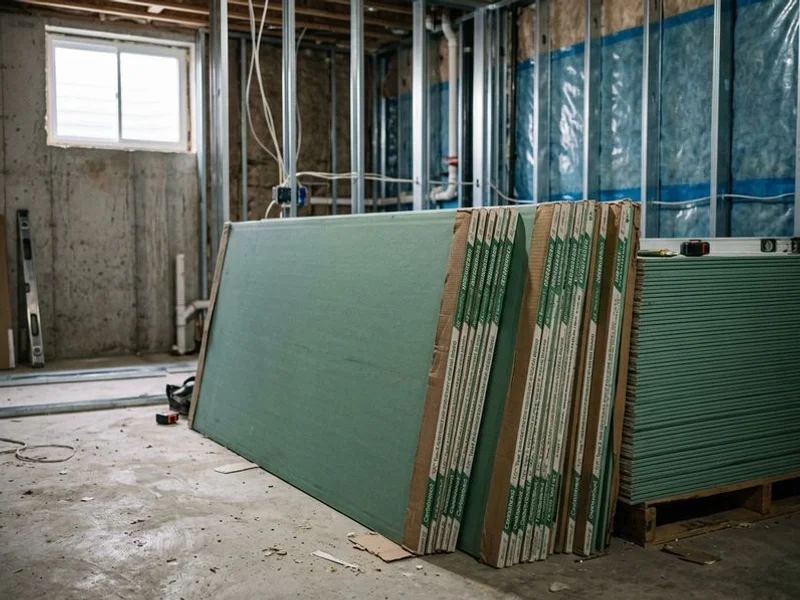
Moisture-resistant green board drywall panels stacked on site for bathroom installation in Toronto home

When Drywall Isn’t the Right Answer

There are bathroom situations where installing new drywall over the existing substrate is not the lasting repair. If the existing wall framing has elevated moisture content from a chronic leak - above 19 percent on a pin meter - the framing needs to dry before anything goes over it, or the new board will see the same moisture problem. If there’s visible mold growth behind the existing board, the mold needs to be remediated before the wall closes again, otherwise it returns behind the new board.

We’ll tell you during the estimate if we see conditions that require work before the drywall phase. That might mean coordinating with a restoration company on a dry-out protocol, or referring to a mold remediation contractor before our scope starts. The alternative - boarding over a wet or contaminated cavity - creates a worse problem in 12 to 18 months that costs significantly more to fix.

Where We Work

Bathroom drywall installation in Toronto and across the GTA, with frequent renovation calls from Etobicoke, Scarborough, and Mississauga. All GTA communities served.
Our Process

How We Deliver Bathroom Drywall

Each step has a single owner: our in-house crew. No handoffs, no finger-pointing.

01

Zone Assessment

We identify the four bathroom zones: tub/shower surround (direct-tile zone), non-shower wet area walls, dry area walls, and ceiling. Each zone has a different substrate requirement.

02

Substrate Selection

Durock or DensArmor Plus for direct-tile zones. Purple Board (USG Sheetrock Mold Tough) for wet-area perimeter walls. Standard Green Board or Purple Board for dry bathroom walls. MR drywall for ceiling.

03

Hang

Board is hung with appropriate fastener schedule. Cement board in wet zones is screwed at 6-inch centres into framing. Purple Board on walls follows standard 16-inch stud layout.

04

Tape

Cement board joints in wet zones are taped with alkali-resistant fibreglass mesh tape embedded in thin-set mortar. Drywall joints in non-tile areas are taped with standard paper or mesh tape and joint compound.

05

Mud and Finish

Non-tiled drywall areas are finished to Level 4 as standard. Bathroom ceiling is finished to Level 4. Tiled areas are left at the substrate stage, ready for the tile setter.

06

Inspection and Handoff

We inspect all joints, corners, and transitions under raking light before signing off. Tiler receives a clean, square substrate. Painter receives a primed, paint-ready finish on non-tiled surfaces.

Real Work

Bathroom Drywall: Recent GTA Projects

A look at projects we've recently completed across the Greater Toronto Area.

Bathroom Drywall project example 1
Recent Project
Bathroom Drywall project example 2
Why Choose Us

Why GTA Homeowners Pick Toronto Drywall Pro

Two decades of GTA drywall work answering one homeowner question: what makes a drywall job actually last? Here's what we've built around.

Single-Crew Workflow

Framing, hanging, taping, sanding, and finishing all run by our in-house crew. No subcontractor handoffs, no finger-pointing.

Dustless HEPA Process

99.97% airborne particle capture during sanding and popcorn-ceiling removal. You can stay in the home while we work.

Level 4 & Level 5 Finishing

Standard Level 4 paint-ready, or full Level 5 skim coat for raked-light walls and gloss-paint accent applications.

Licensed, Bonded, $2M Insured

Fully WSIB-compliant with $2M general liability. Certificates of insurance available on request for condo boards and PMs.

Ontario Code Specialists

Type X fire-rated assemblies, basement-stair separations, and party walls installed to Ontario Building Code spec.

Transparent Pricing

Free on-site estimate with line-item pricing. No surprise charges. We tell you up front when a patch is enough and when it isn't.

Real Results

What Clients Say About Our Bathroom Drywall

4.9 based on 127+ reviews

“The popcorn ceiling removal was unbelievable. They told us their dustless process was the real deal and they weren't kidding - we lived in the house through the whole job and not a speck of plaster on the floor. Smooth ceiling, paint-ready, done in two days.”

Sarah Miller
Etobicoke - dustless popcorn ceiling removal

“Burst pipe behind the kitchen wall on a Saturday. They came out Monday morning, documented everything for our insurance, removed the wet panels, and had it back to paint-ready by Friday. Honestly the easiest part of the whole insurance claim.”

James Davidson
Oakville - water damage ceiling and wall repair

“We had three contractors quote our basement. Toronto Drywall Pro was the only one who showed up with a tape measure, walked the whole space, and explained the difference between Green Board and Purple Board. Final job came in exactly at quote.”

Priya Sharma
Mississauga - full basement drywall finishing
FAQ

Questions About Bathroom Drywall

What type of drywall should be used in a bathroom?

The correct product depends on the zone. Behind tile in a shower or tub surround, use cement board (Durock, HardieBacker) or a rated tile backer like Georgia-Pacific DensArmor Plus. On non-shower wet-area walls, use moisture-resistant drywall such as USG Sheetrock Mold Tough (Purple Board). On dry bathroom walls and ceilings, standard Green Board or Purple Board is appropriate. Standard white drywall should not be used anywhere in a bathroom.

What is the difference between Green Board and Purple Board?

Green Board (USG Hi-Abuse or equivalent) has a moisture-resistant paper face and an interior gypsum core. It is suitable for low-to-moderate humidity areas like bathroom walls away from the shower. Purple Board (USG Sheetrock Mold Tough) has a fibreglass mat face instead of paper and a mould-inhibiting core. It performs better in high-humidity zones and directly around the shower or tub area outside the tile footprint. Purple Board is the current industry standard for GTA bathroom drywall.

Can you put drywall directly behind tile in a shower?

Standard drywall and even Green Board should not be used directly behind tile in a shower or tub surround. Water migrates through grout joints over time and will reach the drywall face. Cement board (Durock, HardieBacker) or a purpose-rated tile backer (DensArmor Plus, WonderBoard) is the correct substrate for direct-tile applications.

What about the bathroom ceiling?

Bathroom ceilings should use moisture-resistant drywall, not standard white board. We use Purple Board on all bathroom ceilings. In bathrooms with inadequate ventilation, we also recommend ensuring the exhaust fan is rated for the room volume and discharges to exterior rather than into the attic.

How do you prevent mould in bathroom drywall?

Mould prevention comes down to substrate selection and ventilation. Using USG Sheetrock Mold Tough (Purple Board) or cement board in all bathroom zones removes the paper face that standard drywall mould feeds on. Adequate exhaust ventilation (HRV or exhaust fan rated for the room volume) prevents condensation from accumulating on surfaces.

Do you install a vapour barrier in bathroom walls?

In wet areas adjacent to showers and tubs, moisture-resistant drywall replaces the vapour barrier function. Where the wall is behind tile in a true wet zone, cement board or a waterproof membrane system is required instead of standard or moisture-resistant drywall. We specify the correct assembly during the estimate based on the application.

Can you replace bathroom drywall without removing the tile?

Sometimes. If the damaged drywall is on a non-tiled wall, we can replace just that section without touching the tile. If the damaged board is directly behind tile, the tile has to come off to reach it. We assess the damage scope before committing to a method.

Can you coordinate with a tile installer on a bathroom renovation?

Yes. We frame and board first, then tile is installed, then we return to tape and finish the non-tiled sections. We coordinate sequencing directly with your tile contractor or schedule our phases around their availability. Proper sequencing prevents moisture damage to the finished drywall.

How long does bathroom drywall installation take?

A standard bathroom reboard runs 1 to 2 days: one day to remove old board and install new moisture-resistant panels and cement board, and one day for taping and finishing on the non-tiled sections. Larger bathrooms or those requiring full gut take longer. Taping requires drying time between coats.

Ready to Get Your Bathroom Drywall Quote?

Free on-site estimate across the GTA. Same-week scheduling for most projects.