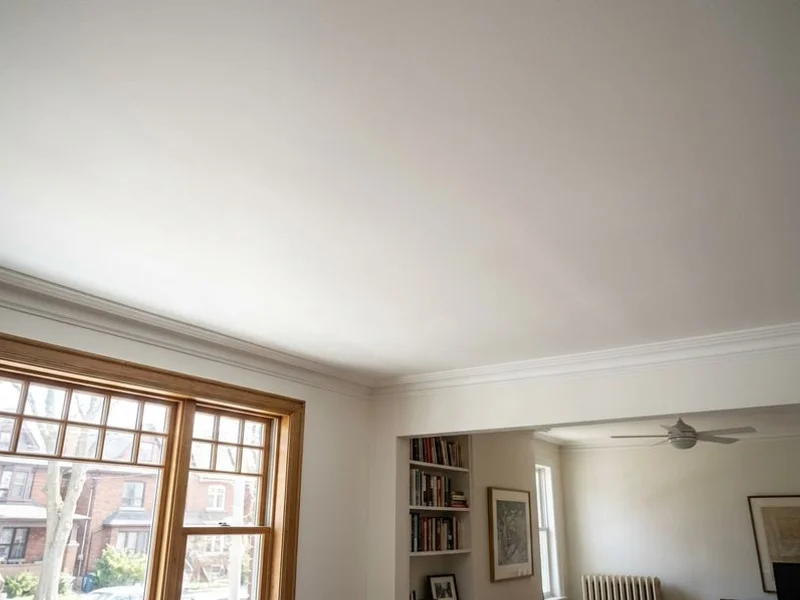
Ceiling Drywall That Stays Flat
Ceiling drywall is harder than wall drywall. Gravity amplifies every fastener spacing error, every joint without a Durabond base coat, and every 1/2-inch panel over a 24-inch joist span. We use 5/8-inch board on all ceilings, set every joint with USG Durabond before finishing, and inspect under raking light at every coat.
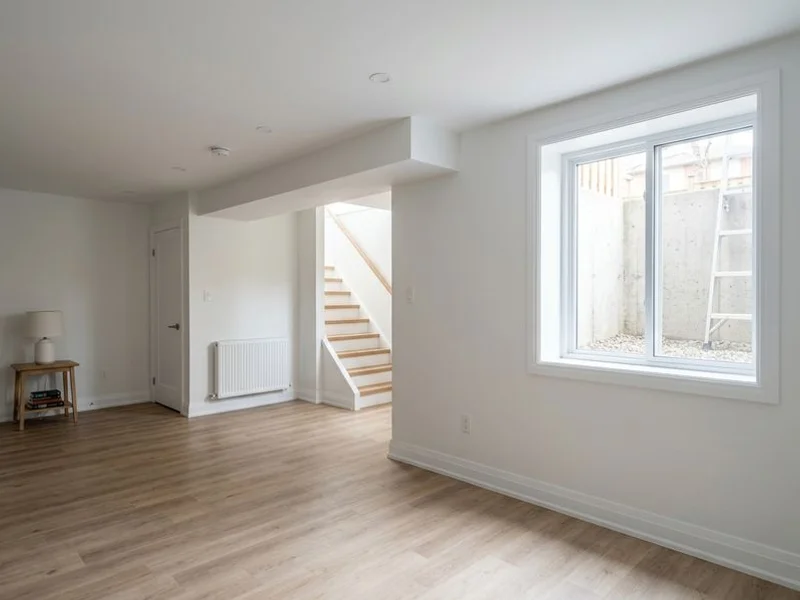
The most common ceiling installations we handle are basement ceilings after finishing, main-floor ceiling repairs after open-concept renovations, and vaulted ceiling finishing on new construction and renovation projects.
Ceiling Drywall Installation Pricing in Toronto
- Basement ceiling (per 500 sq ft): $500 to $900
- Main floor ceiling after renovation: $700 to $1,500
- Vaulted or cathedral ceiling: $1,200 to $2,500
What Is Drywall Ceiling Installation?
Drywall ceiling installation is the hanging, taping, and finishing of gypsum board panels on a ceiling surface. It differs from wall installation in board thickness (5/8-inch vs. 1/2-inch), joint compound selection (Durabond on ceilings, all-purpose on walls), and finishing difficulty. A properly installed ceiling uses the correct board, fastener schedule, and compound sequence to remain flat, joint-free, and paint-ready for the life of the building.
What Does Ceiling Drywall Installation Include?
- Ceiling assessment for joist spacing, height, and span
- 5/8-inch sag-resistant drywall on all ceiling applications
- Panel layout perpendicular to joists to minimise butt joints
- Panel lift used for ceilings over 400 square feet
- Paper tape embedded in USG Durabond 45 on all ceiling joints
- Two all-purpose finish coats, sanded between coats
- Raking light inspection at every coat before proceeding
- Recessed lighting cutouts included
- Level 4 finish standard; Level 5 skim coat available
How Much Does Drywall Ceiling Installation Cost in Toronto?
Basement ceilings per 500 sq ft run $500 to $900. Main-floor ceilings after renovation run $700 to $1,500. Vaulted and cathedral ceilings run $1,200 to $2,500 depending on pitch and height. Free on-site estimates with same-day quoting across the GTA.
Who Needs Drywall Ceiling Installation?
Homeowners replacing a drop ceiling in a basement with a proper drywall ceiling. Renovation contractors who need the drywall phase of an open-concept wall removal handled cleanly. Builders installing ceilings in new construction. Anyone with a sagging or visibly jointed ceiling that needs a fresh start.
Ceiling Types We Install
Flat Level 4 ceilings. The standard finish for most Toronto homes and rental units. Three-coat process on all seams and fasteners, sanded to a flat surface ready for primer. Suitable for most interior paint applications.
Level 5 ceilings for high-gloss or flat paint. When the ceiling spec calls for flat paint or high-sheen finishes - common in high-end condo builds and renovated Annex homes - every seam and fastener needs a full skim coat. We price Level 5 separately from Level 4 because it adds a full coat and additional sanding time.
Coffered and bulkhead ceiling framing. Kitchen bulkheads hiding HVAC ducts, bedroom coffered details, and living room dropped ceilings all start with a steel-stud or wood soffit frame. We frame, hang, tape, and finish so the drywall contractor and the finish carpenter are working from a clean, square substrate.
Suspended ceiling removal and drywall replacement. Commercial offices and older Toronto basement rec rooms often have T-bar suspended ceilings hiding original drywall or concrete. We remove the suspended grid, assess the structural ceiling, and install new drywall direct to the joists or to furring for a cleaner, taller space.
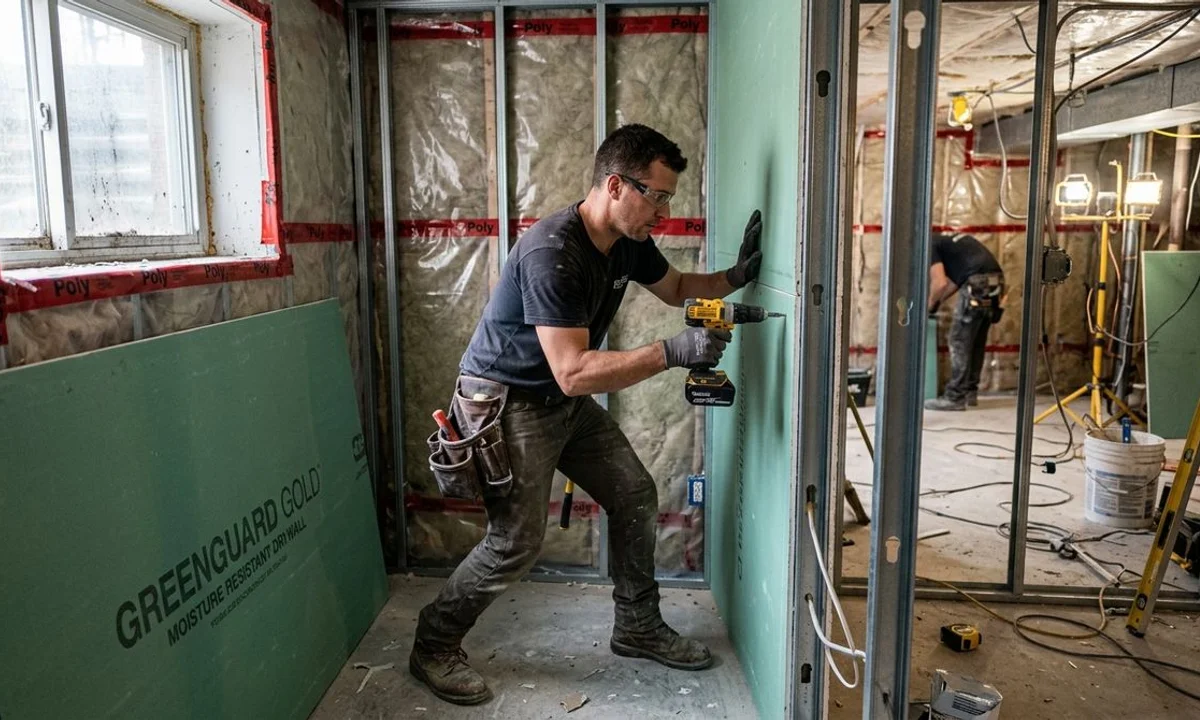
Bathroom and kitchen ceiling installation. Moisture-resistant board above tiled showers and over kitchen ranges, finished to Level 4, with stain-blocking primer before paint.
Ceiling Heights and Construction Realities in Toronto
Toronto’s housing stock ranges from 8-foot ceilings in post-war bungalows to 10 and 12-foot ceilings in Victorian semis. Each presents different installation considerations.
Low 8-foot ceilings in Scarborough and North York bungalows have almost no tolerance for sag or bow in the drywall - any deflection reads immediately under overhead lighting. We use 1/2-inch board on 16-inch centres and never skip fasteners at panel ends.
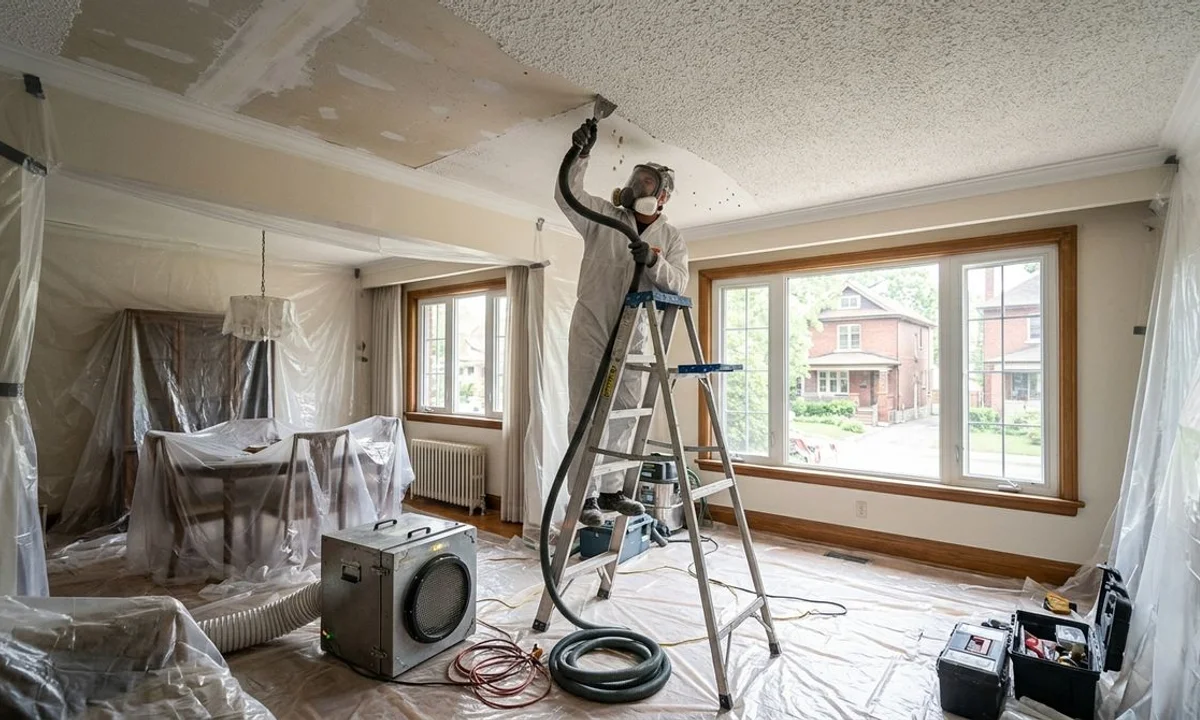
High Victorian ceilings in the Annex and Cabbagetown require scaffold or pump jacks for the hanging phase, and the long panels (12-foot sections in most of these rooms) need two hangers minimum to avoid bowing at the centre. The original plaster-to-drywall transitions in partially renovated heritage homes need careful levelling before the new board goes up.
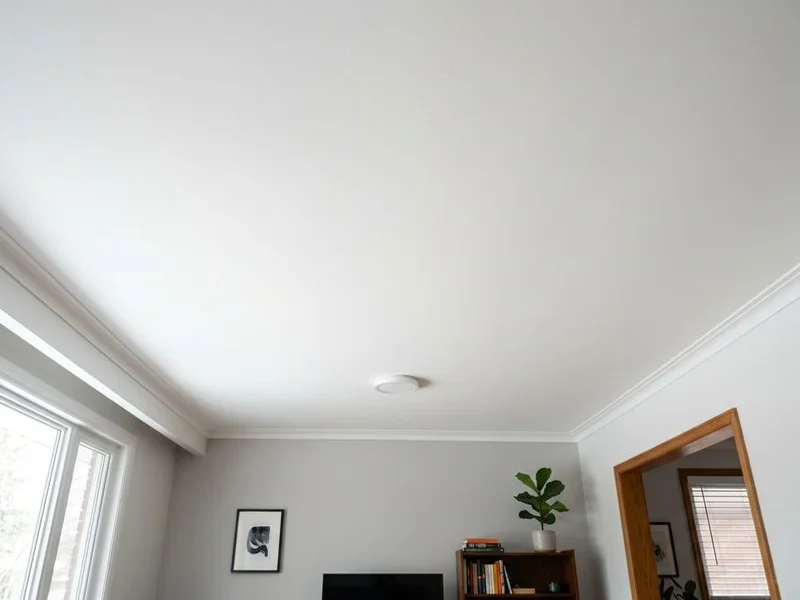
When New Drywall Isn’t the Starting Point
A ceiling installation that goes over a structurally inadequate substrate will fail. If the existing joists are deflecting under load, sistering or reinforcement is needed before new drywall goes up - otherwise the new board follows the deflection and the finish cracks along the same lines as the old. If there’s existing moisture damage in the joist bays, the source needs to be addressed and the framing dried before closing.
We check joist spacing, moisture content, and overall ceiling plane flatness during every ceiling installation estimate. When we find issues, we identify them before pricing and either coordinate the remediation or include it in scope if it falls within our trade (blocking, re-nailing, shimming). What we won’t do is install new drywall over conditions that will fail the new installation within a few years.
Where We Work
Drywall ceiling installation in Toronto and across the GTA. Frequent renovation ceiling calls from Vaughan, Markham, and Mississauga new construction. All GTA communities served.