Drywall Texture Matching in Toronto, ON - Knockdown Texture Match, Orange Peel Repair & Skip Trowel Finishing
GTA Drywall Specialists

Drywall Texture Matching in Toronto, ON - Knockdown Texture Match, Orange Peel Repair & Skip Trowel Finishing

Toronto Drywall Pro matches existing drywall textures on patch repairs, feature walls, and whole-room re-sprays - including knockdown, orange-peel, skip-trowel, and smooth Level 5 finishes. Texture matching is one of the hardest finish skills in the trade: the material, dilution ratio, spray pressure, and applicator motion all affect the output, and a mismatch is visible from ten feet away under normal room lighting. We test every texture match on a sample board and compare it against the original surface before applying to the repair area.

Most texture-match failures happen because the contractor applies the new texture at a different dilution or with a different hopper tip than what produced the original. We document the original texture pattern with macro photography, test three dilution ratios on spare board, and let the sample dry fully before comparing - wet texture always reads finer than dry. Once the match is confirmed we apply to the repair area with the same technique and allow a full 24-hour cure before any paint is applied, so the texture depth doesn't change between application and the client's final inspection.

Licensed & bonded · WSIB compliant · Same-week scheduling

22+
Years in Business
2,000+
Projects Completed
4.9 ★★★★★
(127 Reviews)
$2M
Liability Insurance
Common Problems

Why Toronto Homeowners Call Us for Texture Matching

Invisible texture matching requires the right application technique and the right timing. These are the texture situations that most crews get wrong.

01

Contractors who say a texture cannot be matched

Every texture can be closely matched with the correct equipment and technique. Contractors who say knockdown or orange peel cannot be matched are usually working without a hopper gun. We carry the right equipment for every texture type.

02

Texture that looks right when wet but different when dry

Joint compound changes significantly as it dries. A texture that looks correct when applied can appear too light or too heavy when dry. We let our test patch dry and compare it in the same lighting as the wall before applying to the repair.

03

Primer ghosting through texture

If the repair area under the new texture is not sealed before texturing, the fresh compound draws moisture from the texture and causes it to dry at a different rate and shade than the surrounding surface. A sealer prime coat before texture prevents this.

04

Smooth walls that are impossible to match after a patch

Smooth walls are the hardest texture to match invisibly after a patch because any imperfection in the skim coat is visible under raking light. We skim coat the patch area and feather aggressively into the surrounding surface, then inspect under directional light before handoff.

Texture Matching That Is Actually Invisible

Every texture can be matched. Contractors who say otherwise are usually working without a hopper gun or skipping the test-and-adjust step that makes a match possible.

We identify the texture type, test on a scrap board until the pattern, density, and depth match the surrounding wall, then apply to the repair area. The test step is mandatory - we do not touch the repair surface until the test board looks correct.

Texture Matching Pricing in Toronto

  • Single patch texture match: $200 to $350
  • Multiple patches, same room: $350 to $600
  • Full wall re-texture to match: $400 to $800

What Is Drywall Texture Matching?

Drywall texture matching is the process of applying a new texture to a repaired wall area so that the patched section is visually indistinguishable from the surrounding surface under normal room lighting and paint. It is the most technically demanding finishing skill in drywall work because the original texture was applied continuously across a full wall, and the match must replicate the same pattern, density, depth, and compound dilution in a discrete patch area.

What Does Texture Matching Include?

  • Texture identification (orange peel, knockdown, skip trowel, stomp, smooth)
  • Hopper gun for all spray textures; hawk and trowel for hand textures
  • Test application on scrap board before touching the repair
  • Completed patch base (flat, sanded, primed before texture)
  • Sealer prime coat on repair area before texture application
  • Texture applied to match pattern, density, and depth of existing wall
  • Blend and feather at patch perimeter
  • Spot prime coat after texture for paint handoff

How Much Does Texture Matching Cost in Toronto?

Single patch texture match runs $200 to $350. Multiple patches in the same room run $350 to $600. Full wall re-texture to produce a uniform match runs $400 to $800. Free on-site estimates with same-day quoting across the GTA.

Who Needs Texture Matching?

Homeowners who have had a drywall repair done and need the texture matched before repainting. Sellers who have visible patches in textured walls. Renovation contractors who need a specialist finisher to close out a repair to an invisible standard. Property managers with textured rental units where patches need to blend.

Every Texture We Match

Knockdown texture. The most common texture in 1990s Toronto builds and some commercial spaces. Compound is applied with a roller and then lightly knocked down with a drywall knife to create a low-relief mottled pattern. Matching it requires matching both the application thickness and the knock-down timing.

Orange peel texture. A finer spray texture common in Scarborough and North York tract builds from the 1970s and 1980s. Applied with a hopper gun at specific air pressure and distance. We set up on a scrap board first and adjust until the cell size matches the existing wall.

Skip trowel texture. A hand-applied texture that creates irregular, larger-scale relief. Each plasterer develops a slightly different pattern, making this the hardest texture to match on repairs. We build up in layers and check against the original surface in raking light.

Smooth Level 4 finish. Not technically a texture, but matching a smooth finish after a patch is often harder than matching a texture. Any thickness difference between the patch and the surrounding surface reads as a high or low spot under flat paint. We sand flat and check with a straightedge before signing off.

Stipple and swirl. Older Toronto homes and some 1970s condos have ceiling stipple or swirl applied with a brush or roller. These patterns are almost always on plaster or the first generation of drywall and need to be hand-matched by referencing the adjacent undamaged surface.

Toronto’s Texture Landscape

Toronto’s housing stock spans nearly a century of drywall and plaster finish fashions. Understanding which era a home comes from tells you what texture to expect and how it was applied.

Pre-1950 homes in the Annex, Cabbagetown, and Riverdale have original lime plaster or early drywall with stipple or smooth plaster finish. Mid-century Scarborough and North York builds (1950s to 1970s) have acoustic popcorn ceilings and orange peel walls. 1980s and 1990s infill and subdivision builds have knockdown on ceilings and smooth or light orange peel on walls. Post-2000 condos and renovations trend toward smooth Level 4 and Level 5.

We keep notes on texture type and application method from every job. When a client calls back for a second repair in a different room of the same house, we already know the texture spec.
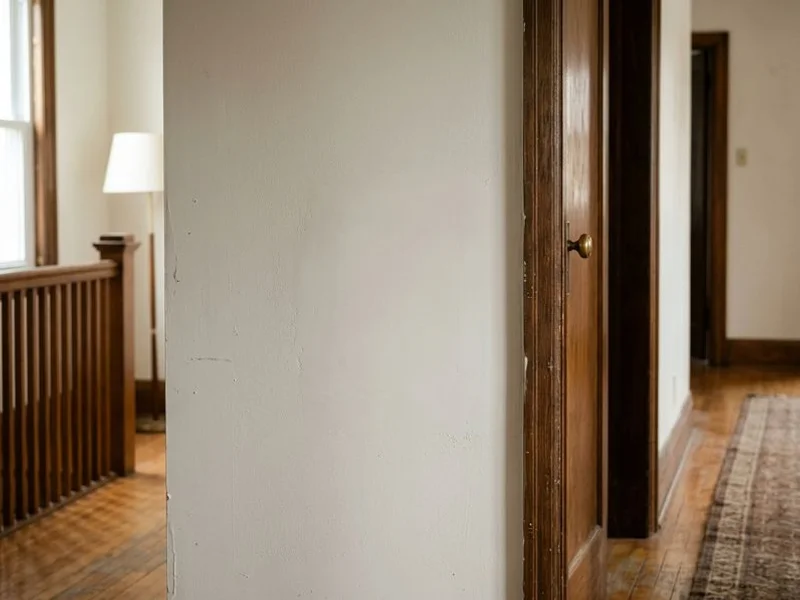
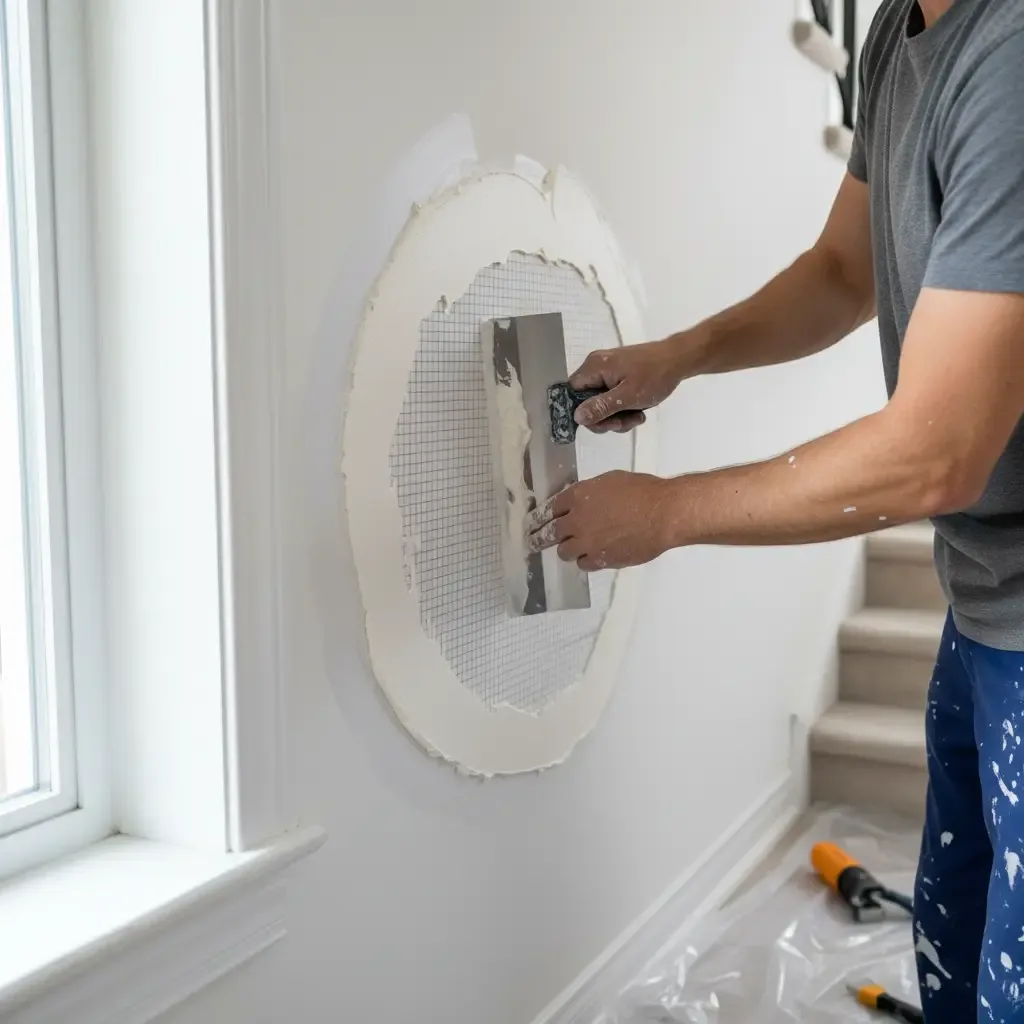
After drywall repair and texture matching showing invisible patch blended into existing wall surface

When Texture Matching Isn’t the Answer

Some texture situations can’t be matched invisibly, and we’ll tell you that before we start rather than after we finish. Acoustic popcorn ceiling texture in pre-1980 homes may contain chrysotile asbestos. We don’t apply new popcorn texture over or adjacent to original acoustic ceiling material that hasn’t been tested. If the existing texture tests positive for asbestos, the scope changes to abatement and replacement rather than matching.

For custom hand-applied textures that an original plasterer developed over a career - elaborate swirl or stipple patterns in older heritage homes - we can get close, but we won’t promise invisibility. The honest approach is to show you a test patch and let you decide whether it meets your standard before we apply across the full repair area.

Where We Work

Drywall texture matching in Toronto and across the GTA. Frequent knockdown and orange peel matching in Scarborough, Etobicoke, and Mississauga homes built in the 1990s. All GTA communities served.
Our Process

How We Deliver Drywall Texture Matching

Each step has a single owner: our in-house crew. No handoffs, no finger-pointing.

01

Texture Identification

We identify the existing texture type: orange peel (fine spray), knockdown (spray then knife), skip trowel (hand-applied irregular), stomp (roller-applied), or smooth. The technique and tools are selected before any compound is mixed.

02

Test Area

For spray textures, we test the hopper gun settings on a scrap board held next to the wall to match droplet size and pattern density before touching the repair area. This is the most important step - skipping it is why texture matches fail.

03

Repair Base

The patch or repair area is fully taped, mudded, and sanded flat to the surrounding surface. Texture cannot be applied over an uneven base.

04

Prime the Repair Area

A sealer prime coat is applied over the fresh compound before texture. This equalises porosity and ensures the texture sticks and dries at the same rate as the surrounding surface.

05

Apply Texture

Texture is applied to match the pattern, density, and depth of the surrounding wall using the technique confirmed during the test step. For hand textures, we build up in passes and let each pass partially set before the next.

06

Blend and Prime

Texture edges at the patch perimeter are feathered to blend into the surrounding surface. After drying, a spot prime coat is applied over the texture and the repair area is confirmed ready for paint.

Real Work

Drywall Texture Matching: Recent GTA Projects

A look at projects we've recently completed across the Greater Toronto Area.

Drywall Texture Matching project example 1
Recent Project
Drywall Texture Matching project example 2
Why Choose Us

Why GTA Homeowners Pick Toronto Drywall Pro

Two decades of GTA drywall work answering one homeowner question: what makes a drywall job actually last? Here's what we've built around.

Single-Crew Workflow

Framing, hanging, taping, sanding, and finishing all run by our in-house crew. No subcontractor handoffs, no finger-pointing.

Dustless HEPA Process

99.97% airborne particle capture during sanding and popcorn-ceiling removal. You can stay in the home while we work.

Level 4 & Level 5 Finishing

Standard Level 4 paint-ready, or full Level 5 skim coat for raked-light walls and gloss-paint accent applications.

Licensed, Bonded, $2M Insured

Fully WSIB-compliant with $2M general liability. Certificates of insurance available on request for condo boards and PMs.

Ontario Code Specialists

Type X fire-rated assemblies, basement-stair separations, and party walls installed to Ontario Building Code spec.

Transparent Pricing

Free on-site estimate with line-item pricing. No surprise charges. We tell you up front when a patch is enough and when it isn't.

Real Results

What Clients Say About Our Drywall Texture Matching

4.9 based on 127+ reviews

“The popcorn ceiling removal was unbelievable. They told us their dustless process was the real deal and they weren't kidding - we lived in the house through the whole job and not a speck of plaster on the floor. Smooth ceiling, paint-ready, done in two days.”

Sarah Miller
Etobicoke - dustless popcorn ceiling removal

“Burst pipe behind the kitchen wall on a Saturday. They came out Monday morning, documented everything for our insurance, removed the wet panels, and had it back to paint-ready by Friday. Honestly the easiest part of the whole insurance claim.”

James Davidson
Oakville - water damage ceiling and wall repair

“We had three contractors quote our basement. Toronto Drywall Pro was the only one who showed up with a tape measure, walked the whole space, and explained the difference between Green Board and Purple Board. Final job came in exactly at quote.”

Priya Sharma
Mississauga - full basement drywall finishing
FAQ

Questions About Drywall Texture Matching

What types of texture can you match?

We match all common drywall textures: orange peel (fine uniform spray), knockdown (spray then partial knife-off), skip trowel (irregular hand-applied trowel marks), stomp (roller-applied with a stipple roller), Spanish knife (random hand-applied peaks), and smooth (no texture). We also match popcorn texture on walls (not ceilings, which is a different process).

Why is texture matching so hard?

Texture matching is difficult because the original texture was applied to a full wall in continuous passes, creating an organic pattern that is almost impossible to replicate in a discrete patch area. The compound formulation, dilution, spray pressure, gun distance, and knife technique all affect the result. The test-and-adjust process before touching the repair is what separates a matched texture from an obvious patch.

What is knockdown texture?

Knockdown texture is applied by spraying diluted compound onto the wall with a hopper gun, then lightly dragging a drywall knife across the surface before the compound fully dries. The knife flattens the tops of the spray droplets but leaves the bases intact, creating an irregular flat-peak pattern. Knockdown was popular in GTA homes built in the 1980s and 1990s.

What is the difference between skip trowel and knockdown?

Knockdown is applied with a hopper gun and then partially knocked down with a knife - it is a spray-first, hand-finish technique. Skip trowel is applied entirely by hand with a trowel, creating irregular thick-and-thin areas by skipping the trowel across the surface before it sets. Skip trowel produces a more irregular, artisanal pattern than knockdown.

What is orange peel texture?

Orange peel is a fine, uniform spray texture that resembles the surface of an orange skin. It is applied with a hopper gun at a specific pressure and dilution and is the most common spray texture in GTA homes built in the 1990s and 2000s. It is distinguished from knockdown by the fact that no knife pass is made after spraying - the texture is left in its sprayed state.

Can you match a custom hand-applied texture from the 1980s or 1990s?

We can get very close on most hand-applied textures from that era. Stipple, skip trowel, hawk and trowel, and knockdown variants are all textures we apply regularly. An exact match depends on the consistency of the original application. We do a test patch and compare under the same lighting conditions before committing to the final repair.

Can you re-texture an entire ceiling to avoid a mismatched patch?

Yes. If a texture patch will not blend acceptably, retexturing the entire ceiling is a cleaner solution. We skim the ceiling flat, apply the new texture uniformly, and the result is consistent across the whole surface. This is often the right call for older stipple ceilings where the texture has varied significantly over time.

How long does texture matching take to dry before painting?

Most spray and hand-applied textures need 24 hours to dry before painting. In cold or humid conditions, drying takes longer. Applying paint over wet texture causes the texture to flatten and lose definition. We confirm the texture is fully dry before recommending the painter proceed.

Do you apply texture to new drywall installations as well as repairs?

Yes. We can apply orange peel, knockdown, skip trowel, or a smooth Level 4 finish on new drywall installations. Texture adds visual interest and hides minor surface irregularities. We include texture application in the finishing scope when requested and match existing textures in adjacent rooms.

Ready to Get Your Texture Matching Quote?

Free on-site estimate across the GTA. Same-week scheduling for most projects.